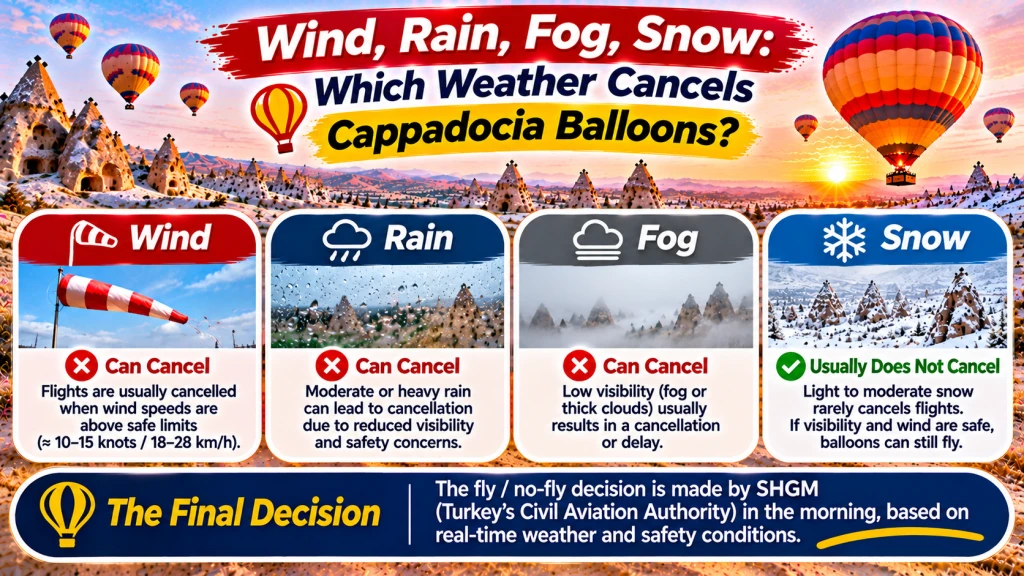
Wind, Rain, Fog, Snow: Which Weather Cancels Cappadocia Balloons?
Wind is the weather that cancels most balloon mornings in Cappadocia, both at ground level and higher up. Rain, snowfall, low cloud and storm risk also close the morning, while fog usually delays take-off until it lifts. A cloudy but calm sky is not a reason to cancel, cold alone never is, and snow already on the ground makes for one of the most beautiful flights of the year. Every cancellation is a weather decision by the aviation authority, and a cancelled flight is moved to a new date or refunded; the full range of Cappadocia balloon flights follows the same rule.
Most travellers know that balloons depend on the weather, but not which weather. A grey morning can fly and a sunny one can be grounded, which makes the decision look random from a hotel terrace. It is not. This guide goes condition by condition, wind, rain, fog, snow, cloud and temperature, and explains what each one does to a balloon, whether it cancels or only delays the flight, and in which season it is most likely.

Wind: The Most Common Reason for a Cancellation

A hot air balloon has no engine for steering; it travels with the wind and lands where the wind takes it. Wind at ground level is the problem during inflation, when the envelope is lying on the field and can be dragged, and at landing, when the basket needs a gentle touchdown. Wind higher up is the problem during the flight, because it carries the balloons too fast or towards areas with no safe landing fields. That second kind is invisible from the ground, which is why a still morning at the hotel can still be closed. Pilots read the upper wind with a small test balloon released on the field before the decision is final.
Wind cancellations happen in every season but are most frequent in late winter and spring, when fronts move through the region. The guide on balloon cancellations in Cappadocia explains how a cancellation is handled.
Rain: Grounded While It Falls
Balloons do not fly in rain. A wet envelope is heavy and slow to inflate, the burners lose efficiency, visibility drops and rain usually comes with the kind of unstable air that pilots avoid. A night of rain followed by a calm, clear dawn is a different story: the morning can be approved, although landing fields may be muddy. Showers in Cappadocia are most common in spring and autumn, and the guide on what to wear for a balloon ride covers footwear for wet fields.
Fog: Usually a Delay, Not a Cancellation

Fog is the condition most likely to postpone rather than cancel. Pilots need to see each other, the terrain and the landing fields, so the balloons wait on the ground until the fog thins. On many mornings it lifts shortly after sunrise and the flight takes off late, often with low mist lingering in the valleys below, which balloon photographers love. If the fog does not clear within the safe window, the morning is closed. Fog is most typical on cold, still mornings in autumn and winter, and after rain.
Snow: Falling Snow Cancels, Snow on the Ground Does Not

Snowfall closes the morning for the same reasons as rain, with poor visibility and a wet, cold envelope. Snow that fell overnight and a clear, calm dawn are the opposite case: the balloons fly, and the white valleys under the first light are among the most memorable views Cappadocia offers. Launch fields are cleared and the pickup runs as usual, with warmer clothing. Snow is a winter question, covered in the guide to winter balloon flights in Cappadocia.
Cloud, Storms and Changing Fronts
A cloudy sky on its own does not cancel a flight; many approved mornings are overcast, and the light under a thin cloud layer is soft and even. What cancels is low cloud that hides the ground, cloud that signals an approaching front and any risk of thunderstorms, which bring sudden wind. The decision looks at the whole flight window, not just the moment of take-off, so a calm dawn can be closed because the forecast shows the wind arriving an hour later. Pick any of the balloon flights available to book and the same rule applies to all of them.
Heat and Cold: Not Cancellation Reasons
Temperature by itself does not ground a balloon. Cold mornings are normal in winter, and the flight goes ahead at temperatures well below freezing; the burners warm the air above the basket, and the main effect is on your hands and feet. Summer heat has the opposite effect: warm air gives the envelope less lift, so summer flights take off very early, right at first light, before the ground heats up. Neither cancels a flight; the best time for a balloon ride in Cappadocia compares what each season feels like.
Weather Conditions at a Glance
ConditionEffect on the flightMost common seasonStrong wind (ground or aloft) | Cancelled | Late winter and spring |
Rain or showers | Cancelled while falling | Spring and autumn |
Fog | Delayed; cancelled if it does not lift | Autumn and winter |
Falling snow | Cancelled | Winter |
Snow on the ground, clear sky | Flies | Winter |
Overcast but calm | Flies | Any season |
Low cloud or storm risk | Cancelled | Spring and summer afternoons |
Heat or cold alone | Flies, earlier in summer | Any season |
Who makes the decision, and when, is explained in the guide to the SHGM morning approval, and whether balloons are flying today has its own daily guide.
Which Season Has the Most Weather Cancellations?
- Winter: the most cancellations, mainly wind and snowfall; plan several backup mornings.
- Spring: changeable, with wind and showers between many fine mornings; the April balloon guide describes a typical month.
- Summer: the fewest cancellations; early take-offs because of the heat.
- Autumn: stable air and the most reliable flying of the year; the October balloon guide covers the peak.
The cancellation rate by month puts figures on each season, and the balloon season in Cappadocia month by month shows what to expect on your dates.
How to Protect Your Flight From the Weather
You cannot change the forecast, but you can change where the flight sits in your trip. Book it for the first morning of your stay so that every later morning is a backup; the guide on which morning of your stay to schedule the flight explains why. Check the message from the booking team the evening before, keep the pickup time even if the sky looks doubtful, and remember that a cancellation always gives you a free new date or a full refund under the cancellation and refund policy. On a grounded morning the sunrise is still worth seeing from a viewpoint; the guide on where to watch the balloons lists the best spots for the next flying day.
Local insight
The weather that worries travellers most, a grey sky, is the one that matters least; the weather they rarely think about, wind a few hundred metres up, is the one that closes the morning. Looking at the trees and flags at the hotel tells you almost nothing. The crews on the launch fields watch the test balloon and the forecast for the whole flight window, and that is the information the decision is based on.
Book a flight, keep a backup

All Cappadocia balloon flights in one place: shared and private baskets at sunrise over Göreme, with hotel pickup, light breakfast, landing celebration, flight certificate, passenger insurance and taxes included. A weather cancellation is moved to a new morning or refunded in full.
Frequently Asked Questions
Which weather cancels balloon flights in Cappadocia most often?
Wind. Strong wind at ground level makes inflation and landing unsafe, and strong wind higher up carries the balloons too far or too fast. It is the most common reason for a closed morning in every season.
Do balloons fly in the rain in Cappadocia?
No, not while rain is falling. A calm, clear morning after a rainy night can be approved, although the landing fields may be muddy.
Does fog cancel a balloon flight?
Usually it delays it. The balloons wait on the ground until the fog lifts and take off later; if it does not clear within the safe window, the morning is cancelled.
Can balloons fly when there is snow in Cappadocia?
Yes, when the snow is on the ground and the sky is clear and calm. Falling snow cancels the flight, like rain. A flight over snow-covered valleys is one of the highlights of winter.
Do cloudy skies cancel balloon flights?
Not on their own. Many approved mornings are overcast. Low cloud that hides the ground, an approaching front or storm risk are what close the morning.
Does cold or heat cancel a balloon flight?
No. Flights run at temperatures well below freezing in winter. In summer the heat only means an earlier take-off, because warm air gives the balloon less lift.
Read the Forecast, Then Book the First Morning
Whatever the season, a flight on the first morning with a backup behind it is the surest way to fly.
Worried about the forecast for your dates? The booking team answers on WhatsApp at +90 554 204 50 01.
More morning-by-morning questions in the weather and cancellations category, and the safety side in how safe hot air balloons are in Cappadocia.