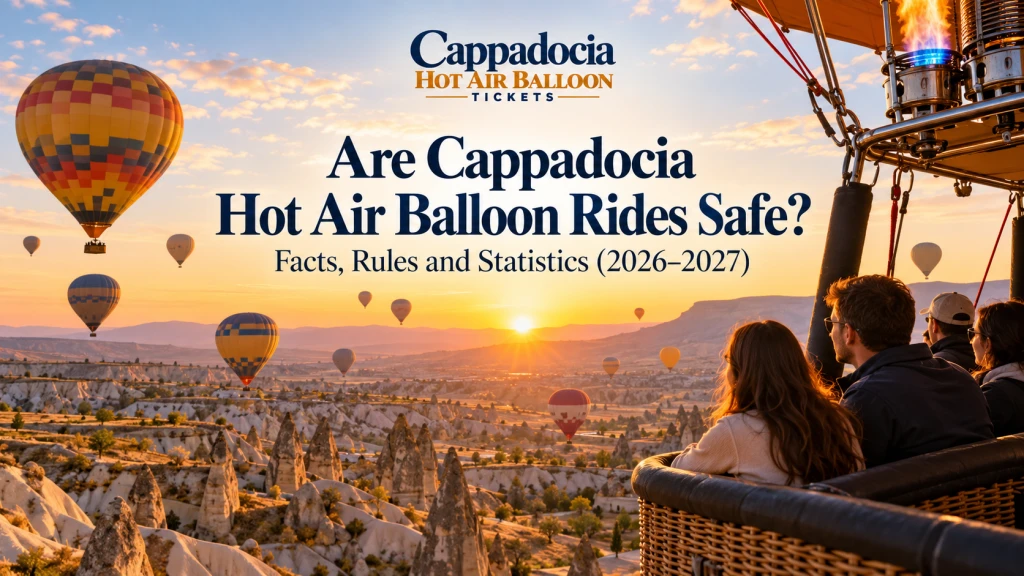
Are Cappadocia Hot Air Balloon Rides Safe? Facts, Rules and Statistics (2026–2027)
Yes. Cappadocia hot air balloon rides are safe by the standards of adventure tourism. Every flight is licensed and supervised by Turkey's Directorate General of Civil Aviation (SHGM), the weather is checked every morning before any balloon can take off, and serious accidents are rare: in 2025 alone, 754,098 passengers flew over Cappadocia. The risk is not zero. Most incidents happen during landing when the wind changes suddenly, which is why choosing a licensed operator and following the crew's landing instructions matter most.
We book balloon flights from our office in Avanos every day, and "is it safe?" is one of the first questions families, couples and first-time flyers ask us. This guide gives you the honest answer for the 2026 and 2027 seasons: the numbers, the rules, the accidents that happened and what changed after them, and what you can do to fly as safely as possible.

Cappadocia Balloon Safety in Numbers
Cappadocia is the busiest hot air balloon region in the world, and Turkey publishes its flight figures every year.
FigureValueSourceBalloon passengers in Cappadocia, 2025 | 754,098 | SHGM |
Mornings suitable for flying, 2025 | 223 | SHGM |
Balloons registered in Cappadocia | 367 | SHGM |
Licensed balloon pilots in the region | 585 | SHGM |
Balloon passengers in Turkey, 2024 (record) | About 933,000 on about 43,000 flights | Ministry of Transport |
Authorised balloon operators in Turkey | 71 | Ministry of Transport |
Passengers in Cappadocia, 2015–2024 | About 4.76 million | SHGM data, reported in Turkish press |
An academic study of Cappadocia balloon flights between August 2013 and July 2017 (Aslaner, 2019) counted about 1.4 million passengers and 12 accidents in that period, or roughly 8.5 accidents and 2.1 deaths per million passengers. Put simply: the vast majority of people who fly in Cappadocia land with nothing more than a great memory, but balloon flying, like any form of aviation, carries a small real risk.
Who Makes Sure Balloon Flights Are Safe?
Ballooning in Cappadocia is not a loosely run tourist activity. It is commercial aviation, regulated by SHGM in the same way airlines are, with its own detailed rulebook for balloon operators.
- Licensed operators only. Only companies authorised by SHGM can carry passengers. They must have an approved operations manual, a flight operations manager, maintenance records and passenger insurance.
- Licensed pilots. Every commercial pilot holds a balloon pilot licence, a medical certificate and recurrent training.
- Registered balloons. Each balloon is registered and has to pass airworthiness checks; envelopes, burners, fuel cylinders and baskets have inspection and service intervals.
- A slot system. Since July 2013, SHGM has used a slot system for the Cappadocia flight area that limits how many balloons can fly at once and organises take-off areas, to keep balloons apart.
- A daily weather decision. Every morning SHGM gives one ruling for all operators: red means nobody flies, yellow means wait, and green means flights are allowed, with the final decision left to each pilot.
That last point matters most. On average a little over one morning in three is cancelled, mostly in winter. Cancellations are frustrating, but they are the safety system working.
What Happens Before Take-Off

Long before you arrive at the launch field, the pilot has already studied the forecast, the upper winds and the flag decision. At the field, the crew lays out the envelope, fills it with cold air from a fan and then heats it with the burners until the balloon stands upright. The pilot checks the burners, fuel lines, ropes and the basket before anyone climbs in.
Then comes the part passengers sometimes rush through: the safety briefing. The pilot explains how to climb in, where to stand, what not to touch and, most importantly, how to take the landing position. Listen carefully, even if you've flown before. If you don't understand the language, tell the crew; they'll show you.
Cappadocia Balloon Accidents: What Happened and What Changed
Being honest about accidents is part of being honest about safety. These are the most serious balloon accidents in Cappadocia in recent years, as reported by Turkish and international media.
DateWhat happenedLesson for passengers and operatorsMay 2013 | Two balloons collided in the air near Göreme; 3 passengers died | SHGM introduced the Cappadocia slot system in July 2013 to separate balloons |
February 2017 | A passenger fell from the basket during a rough landing; 1 died | Holding the handles in the landing position until the basket stops is essential |
April 2017 | A balloon hit a power line during descent; 1 passenger died | Landing areas and power lines are a key part of pilot training and route planning |
October 2022 | A sudden increase in wind caused a hard landing; 2 passengers died | Weather can change after take-off, so the landing briefing matters on every flight |
June 2025 | A sudden wind change caused a hard landing near Ihlara (Aksaray); the pilot died and passengers were lightly injured | Even in good forecasts, landings need full attention from crew and passengers |
Every one of these is a tragedy, and each was investigated by the authorities. The pattern is also clear: most serious incidents happen at landing, usually when the wind picks up unexpectedly. That is exactly where passengers can help keep themselves safe.
Landing Safely: The One Thing Every Passenger Must Know

Most landings in Cappadocia are gentle. The ground crew follows the balloon by car and the pilot often sets the basket straight onto its trailer. But on a windy morning a landing can be firm, and the basket may bump, tilt or drag a few metres. Here's how to be ready:
- Take the landing position when the pilot asks: face away from the direction of travel, knees bent, back against the basket wall.
- Hold the rope handles inside the basket with both hands.
- Stay in position until the pilot says the basket has fully stopped. Don't stand up to film the landing.
- Put away loose items: phones in pockets, camera straps around your wrist, hats secured.
- Wait for the crew to help you climb out, one person at a time.
Who Should and Shouldn't Fly
Most healthy adults and children can fly. You need to be able to stand for about an hour, climb into a waist-high basket with help and hold the landing position. Talk to us before booking if you are pregnant, have recently had surgery, have serious back, neck or heart problems, or use a wheelchair. Operators also set a minimum age and height for children, so tell us your children's ages when you book and we'll confirm.
For comfort: wear flat, closed shoes, dress in layers (it's cold before sunrise, even in summer), and bring a hat; the burners are hot overhead.
How to Choose a Safe Balloon Company in Cappadocia

The single most important safety decision you make happens before the flight: who you book with.
- Book through a licensed agency or directly with an SHGM-authorised operator. Ask for the agency's TÜRSAB licence number (ours is A-Group No. 18349).
- Avoid street sellers and "too cheap to be true" offers. Very low prices can mean an unclear operator, no transfer or no insurance.
- Check that passenger insurance is included. Every flight we sell includes it.
- Ask what happens if the weather cancels the flight. A serious company moves you to the next available morning or refunds you in full. Pressure to fly in doubtful weather is a warning sign.
- Prefer a smaller basket if you're nervous. A comfort small-basket flight, a deluxe flight or a private basket gives you more space and more contact with the pilot. The safety rules are exactly the same on every flight type, including the 90-minute flight.
Is One Area Safer Than Another?
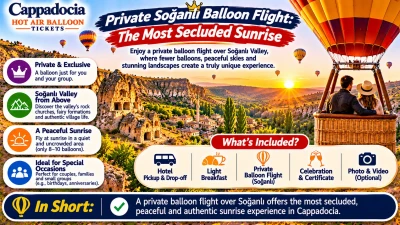
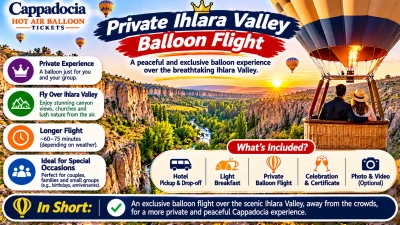
All regions fly under the same SHGM rules and the same morning decision. Göreme has the most balloons in the sky, which is why the slot system exists there. The Ihlara and Soğanlı valleys have far fewer balloons, which many nervous flyers find calmer, though weather at landing still matters everywhere. You can compare them on our Ihlara and Soğanlı flights page, see every Göreme option on the Göreme flights page, or look at private Ihlara, private Soğanlı and all private balloon flights if you'd prefer a basket only for your group.
What's New for the 2026 and 2027 Seasons
The safety framework for 2026 is the same one that carried a record number of passengers in recent years: SHGM-authorised operators, licensed pilots, the slot system and the daily flag decision. We expect the same rules to apply in 2027, and we'll update this guide if SHGM changes them. What does change from year to year is demand: spring and autumn mornings fill fast, so booking early gives you the flexibility to keep a backup morning in case the weather cancels your first one. For current prices and dates, see every flight and today's prices.
From our Avanos office
The calls we take on cancelled mornings are never fun, but we've learned to see them differently. Every red flag means someone looked at the wind and decided your safety comes before a sold-out sky. The guests who enjoy their flight most are the ones who planned two or three mornings in Cappadocia, booked the first one, listened to the briefing and held the handles at landing. That's really all it takes. If you're nervous about flying, tell us on WhatsApp before you book; we'll explain exactly what to expect and help you pick the calmest option.
Fly with a licensed team in Göreme

The standard Göreme flight: licensed pilot, SHGM-authorised operator, hotel pickup, breakfast, landing celebration, certificate and passenger insurance included.
Frequently Asked Questions
Is it safe to ride a hot air balloon in Cappadocia?
Yes. Flights are regulated by Turkey's Civil Aviation authority (SHGM), pilots are licensed, and balloons only fly when the weather is approved. In 2025, 754,098 passengers flew over Cappadocia. Serious accidents are rare, but no form of aviation is completely risk-free.
How many balloon accidents have there been in Cappadocia?
There have been a small number of serious accidents over the years, including a mid-air collision in 2013 and hard landings in 2017, 2022 and, in nearby Ihlara, 2025. Most incidents happen during landing when the wind changes suddenly.
Who decides if balloons can fly in Cappadocia?
SHGM checks the weather every morning and gives one ruling for all operators: red means no flights, yellow means stand-by and green means flights are allowed. The pilot has the final say for each balloon.
What should I do during the balloon landing?
Take the landing position when the pilot asks: face away from the direction of travel, bend your knees, keep your back to the basket wall and hold the rope handles until the basket has fully stopped.
Are small-basket or private balloons safer?
The safety rules are the same for every flight type. A smaller or private basket gives you more space and more contact with the pilot, which many nervous flyers find reassuring.
How do I choose a safe balloon company in Cappadocia?
Book through a licensed agency or an SHGM-authorised operator, check that passenger insurance is included, avoid street sellers and unusually cheap offers, and ask what happens if the weather cancels your flight.
Who wrote this guide
EMK Travel is a TÜRSAB A-Group licensed travel agency (Licence No. 18349) based in Avanos, in the heart of Cappadocia. We've been arranging balloon flights, tours and transfers in the region since 2018, and we handle every booking ourselves, with no call centres and no middlemen.
Fly Safely, Fly Happy
Choose a licensed team, plan a spare morning and listen to your pilot.
Book the standard Göreme flight
Have a question about safety, health or children? Tap the WhatsApp button on this page and our Avanos team will answer honestly before you book.
Prefer to see every option first? Go to booking your balloon flight.